3.3 Wahlveranstaltungen

Lektionsüberblick
1) Vereine und AGs
Look at the following slides and read about (and listen to) the differences in where extracurricular activities take place.
Deutsch IRL
Here are some school webpages featuring their AGs:
- Realschule Hohenlimburg
- Realschule Bad Wurzach
- Realschule Bayern
- Helfenstein Gymnasium
- Gymnasium Hittfeld
- Hauptschule Gummersbach
- Hauptschule Innenstadt
- Grundschule Friedrich Wilhelm Wander
- Grundschule Meckelfeld
Learn more about school sports in Germany in this linked post “Schulsport in Deutschland”.
Want to go back in time and see how the Swiss youth of past generations spend their time? Check out these videos!
- Freizeitgestaltung der Jugendlichen (1943, 6m)
- Konsumwahn bei Jugendlichen | Hip-Hop und Skaterkleider in den 90er Jahre (13m)
- Bauernkinder (1984, 30m) | Aufwachsen auf dem Bauernhof
Jetzt bist du dran!
Hast du Schulsport gemacht? Wenn ja, welchen? Hast du sonst irgendwelche AGs gemacht? Wenn ja, welche? Using the modeled language above, answer the questions in your written journal, naming which extracurricular activities you participated in while in school.
When you are done, check your work. Then record your answers in your audio journal.
Lausanne im Blickpunkt
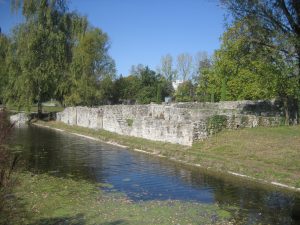
Lausanne ist über 8000 Jahre alt. Die ältesten Spuren von Menschen in dieser Region stammen aus der Zeit um 6000 v. Chr. Später lebten hier die Gallier und die Römer. Damals trug der Ort den keltischen Namen „Lousonna“. Heute kann man im Namen noch die alte Geschichte erkennen.
Lausanne is over 8,000 years old. The oldest traces of human settlement in this region date back to around 6000 BC. Later, the Gauls and Romans lived here. At that time, the town bore the Celtic name “Lousonna.” Today, the name still reflects the ancient history.
2) Demokratie für Kinder
| Frage/Question | Translation |
|---|---|
| Warst du Klassensprecher? | Did you participate in student government while in school? |
| Welche Erfahrungen hast du mit dem Klassensprecher bzw. der Klassensprecherin an deiner Schule gemacht? | What experiences did you have with student government at your school? |
| Welche Aufgaben haben die Klassensprecher*innen gehabt? | What responsibilities did kids in student government have? |
In der Demokratie ist das Wählen sehr wichtig. Das darf man allerdings erst, wenn man 18 Jahre alt ist. Bei einigen Wahlen darf man schon mit 16 Jahren mitmachen. Kinder dürfen zwar nicht das Parlament wählen, dafür haben sie aber besondere Rechte. Dazu gehört auch das Recht, beschützt aufzuwachsen und zur Schule zu gehen.
Die Demokratie ist eine Idee davon, wie Menschen miteinander umgehen sollen. Das können auch Kinder erleben, zum Beispiel in der Schule. Dort werden Klassensprecher und Schülervertreter gewählt. Sie vertreten andere Schüler, dürfen mitreden und manchmal über bestimmte Dinge mitentscheiden. In einigen Städten und Gemeinden gibt es sogar eigene Kinder- und Jugendparlamente.
A fifth grade class at the Orientierungsstufe Findorff made this video with Playmobil figurines to show how the Klassenrat, the class council, works with Demokratie und Verantwortung im Klassenraum. How much can you understand? Watch the video and see how many questions you can answer.
Deutsch IRL
There are many videos explaining how student government works.
- Klassensprecher-Wahl (20sec): Anna-Sophie makes her pitch to become Klassensprecherin.
- Klassensprecherwahl: So kannst du die Schule mitgestalten (4m): Short video explaining the duties of the Klassensprecher*innen and how the election works.
- Die Klassensprecherwahl mit Playmobil (8m): Skit with Playmobil figurines about the election to student government.
- Was macht ein Klassensprecher? Lern- und Erklärvideo für Kinder (1m): A very short video on the responsibilities of the class speaker.
- Schule aktiv mitgestalten: Images and texts on student government.
Jetzt bist du dran!
Jetzt kombinieren!
In this lesson, you learned about1) the sports, music, and other club activities you participated in and 2) your engagement with student government at your school. Now it’s time to combine your knowledge!
Welche Wahlveranstaltungen an deiner Schule hast du gewählt? Warst du auch mal in einem Klub außerhalb der Schule?
In your written journal, write out a brief dialogue between you and the new friend you’ve made on your study abroad. What questions do you ask? How does the friend answer. What questions does the friend ask? How do you answer? You may be very tempted to write this in English first and then translate it. Resist that temptation! Remember that your conversation does not need to be precise. You cannot sound like you have been speaking German your whole life, when you have only been speaking it for a couple years. Use the German you know and the language modeled here.
When you are done, record your dialogue. As always, feel free to meet up with a classmate and record together.
Media Attributions
- 2030-2040 ch banner reduced size
- Photo of Roman ruins by cometstarmoon, Flickr, CC BY 2.0
- https://klexikon.zum.de/wiki/Demokratie ↵